The Power of the Subconscious Mind: How Remote Viewing Unlocks Hidden Potential
This article explores the profound insights gained from a conversation with Taoist master San Qing, highlighting the transformative power of Controlled Remote Viewing (CRV) and ancient Taoist wisdom. Explore how CRV taps into the power of the subconscious mind, uncovering hidden insights that reveal the depth of human consciousness. Much like Taoism, CRV offers a structured approach to connecting the conscious and subconscious minds, using ideograms, sensory descriptions, and intuition-based sketches to expand awareness.
Read to learn how to develop remote viewing skills through validation techniques that deepen self-awareness, offering practical tips for managing intuitive impressions. Get to know the multidimensional nature of effortless flow resonating with Taoist teachings.
Introduction: How Remote Viewing and Taoist Wisdom Illuminate Our True Potential
In a recent, deeply meaningful conversation with Taoist master San Qing, we explored insights into consciousness, reality, and the transformative practice of Controlled Remote Viewing (CRV). After more than two decades of teaching CRV, I was thrilled to gain new perspectives on the power of the subconscious mind and the boundless nature of our potential. Together, San and I examined how structured practices like CRV and ancient Taoism practices help us tap into universal consciousness and our place within it.
In this article, I’m excited to share six takeaways from our conversation. Whether you’re just beginning to explore remote viewing or already diving into consciousness studies, I hope these ideas inspire you to delve into your mind and heart. There’s a vast landscape of potential waiting just below the surface, and each of us can learn to access it in simple, life-changing ways.
The Subconscious as the Key to Our Potential
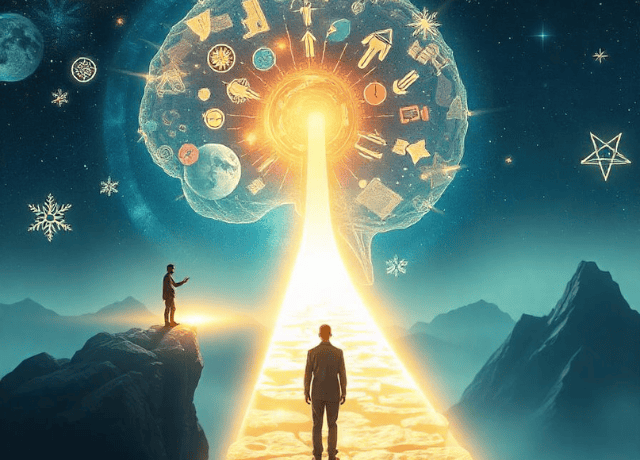
The power of the subconscious mind is like a deep ocean of untapped potential, making up nearly all of who we are. The conscious mind—that part we’re aware of—often thinks it’s running the show, but in truth, it’s like the “CEO” managing a much larger system. In reality, the subconscious is where the real magic happens. CRV is a powerful way to reach into this reservoir of hidden insights and knowledge, bringing forward things we don’t usually notice consciously. Imagine it as shining a flashlight into a dark room, revealing parts of ourselves we might never have seen otherwise.
In CRV, we use techniques to bridge the conscious and subconscious, creating a structured path for insights to flow. I know this might sound abstract, but trust me, it’s incredibly practical! During sessions, my students often report these “just knowing” moments—times when they’re certain of something without knowing exactly why. These impressions reveal perspectives that go far beyond what the conscious mind could reach alone, emphasizing the significance of the power of the subconscious mind and expanding our potential in ways we might never have imagined.
Controlled Remote Viewing: A Practical Skill for Expanding Awareness
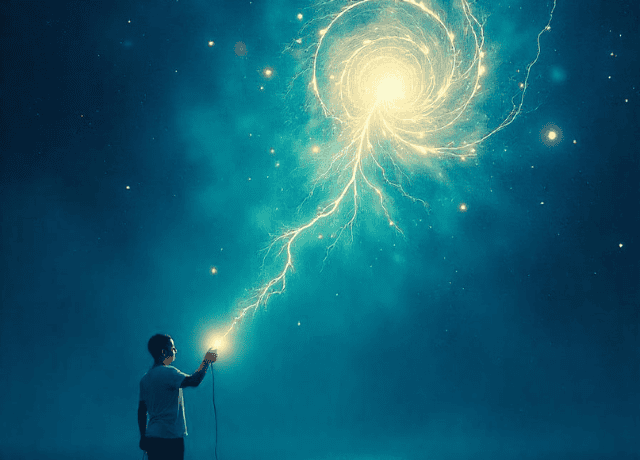
Despite its mystical feel, CRV is a practical skill with a scientific foundation. For those wondering how to develop remote viewing, CRV offers a grounded, step-by-step approach. Developed by the U.S. military to gather information through structured intuition, CRV is grounded in principles like repeatability, clarity, and reliability. Each phase of CRV has a unique purpose, from quick “ideograms” representing big ideas (like water, land, or energy) to sketching more detailed impressions. This structure teaches the subconscious mind to communicate directly with the conscious mind.
For example, in Phase One, we start with ideograms—quick marks that represent broad categories, like water, energy, or land. Think of this as learning the alphabet of your subconscious. As we move through each phase, these symbols and descriptions deepen, creating a clearer, fuller picture of our impressions. San Qing mentioned that similar methods are used in Taoism practices, where practice is essential for building that bridge to higher awareness. Like any skill, the more we practice, the more naturally it flows.
The Power of Interconnectedness and Love in Consciousness
One of the most moving things about remote viewing is how it reveals our interconnectedness with everything around us. When practicing clairvoyance remote viewing, we’re reminded that we’re all part of a larger, interconnected web. The more we tap into this web, the more we feel a sense of love—not just romantic love, but a deep compassion for everything. It’s a sense of belonging to something far greater than ourselves.
San Qing shared how this connectedness is also a natural outcome of expanding awareness of Taoism. In CRV, we experience this each time we connect with a distant target. It’s as if our minds reach out and connect with the energy of the target, reminding us how closely tied we are to everything around us. In this way, love becomes more than a feeling—it becomes a way of being. Living from this connected place brings a whole new light to our lives and relationships, helping us see that we’re part of one incredible, interwoven world.
How to Develop Remote Viewing: Validation and Structure
One thing that sets CRV apart from other intuitive practices is its structured approach, which gives us a way to validate the information we receive. For those wondering “how to develop remote viewing?”, CRV provides a step-by-step process for translating impressions into reliable information. One of the first things I teach my students is “Describe, don’t identify.” This simple principle is incredibly powerful! By focusing on descriptions, we avoid premature labeling that can lead to inaccuracies.
For instance, if you sense something round and metallic, your mind might jump to “coin.” But if you describe it as “round, metallic, shiny,” you might discover it’s a button, a wheel, or something else entirely. CRV is all about letting the power of the subconscious mind bring forward information without interference from our conscious mind’s guesses or judgments. By breaking impressions down into sensory details like texture, color, and shape, we prevent the conscious mind from jumping to quick conclusions. San Qing mentioned that similar methods are used in Taoism, where practitioners ensure they’re not projecting assumptions onto their perceptions.
Key CRV Phases to Improve Validation:
- Ideograms – Quick sketches representing broad concepts like water, energy, or land.
- Sensory Descriptions – Focusing on physical sensations like color, temperature, or texture to refine impressions.
- Sketching – Drawing aspects of a target without overthinking, allowing subconscious impressions to flow.
- Touch-Based Data Gathering – “Touching” parts of a sketch to draw out more details, building the scene gradually.
Parallel Realities and the Multi-Dimensional Self
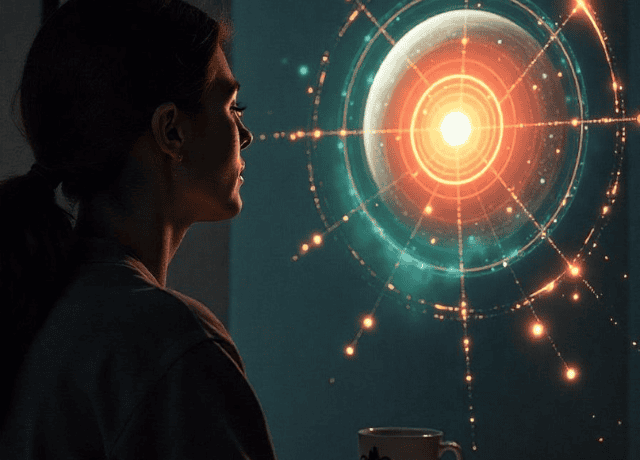
One of the most profound experiences I’ve had involved glimpsing multiple realities coexisting alongside my own. It was a powerful reminder that we’re more than just this one version of ourselves; we are multidimensional beings, capable of accessing other realms and perspectives. This may sound mystical, but it’s grounded in understanding the power of the subconscious mind and our ability to navigate these dimensions.
Our conversation touched on the Taoist idea of Wu Wei, or “effortless action,” which felt very aligned with my experience. When we’re in the flow of consciousness, intuition and synchronicity naturally guide us. Life just flows—almost as if it’s happening through us, rather than us having to make it happen. By embracing this effortless flow, we experience a unique kind of freedom that comes from living in harmony with the universe. It’s a reminder that we’re not just physical beings, but expansive consciousness expressing itself in countless ways.
Learning as a Journey of Self-Discovery
Teaching CRV has shown me that each person carries a vast well of potential. Many students start curious, only to find themselves uncovering talents and abilities they never knew were there. As they develop remote viewing skills, they also deepen their awareness of the power of the subconscious mind. Both San Qing and I agreed that true learning is a journey back to the essence of who we are.
As we expand our awareness, qualities like compassion, empathy, and love naturally arise. These aren’t just “nice” side effects—they’re the core of who we truly are. Every exercise, every lesson, and every breakthrough in awareness brings students closer to embodying their fullest potential. Whether you explore this through CRV, Taoism practices, or any other path, the journey is uniquely your own. Each step brings you closer to the truth of who you are.
Conclusion: Embracing Your Infinite Potential
This conversation with San Qing reinforced that consciousness is as boundless as it is accessible. Every insight adds a new layer to our understanding, helping us glimpse the vast, interconnected web of reality. As we develop our skills—whether through structured practices like CRV or ancient wisdom traditions like Taoism—we gain access to the larger essence of who we are.
In this space of exploration, we begin to see ourselves not as isolated beings, but as integral parts of the universe, with the ability to tap into endless knowledge and wisdom. Whether you’re curious about how to develop remote viewing or eager to deepen your understanding of consciousness, remember that this journey is uniquely yours. Step forward with courage, openness, and a spirit of curiosity, you never know what you’ll discover.
