Unlocking the Power of Controlled Remote Viewing: A Practical Guide
In my years of teaching Controlled Remote Viewing (CRV), I’ve witnessed incredible transformations as people learn to access and harness their natural intuitive abilities. Whether it’s for locating an ideal place to live, refining professional decisions, or even exploring distant places and times, remote viewing practice offers practical techniques that anyone can learn. This structured approach, developed by Ingo Swann for military applications, is now available to anyone curious about exploring consciousness.
The Birth of Controlled Remote Viewing (CRV)
When digging into the history of remote viewing (CRV) emerged from U.S. military research in the 1970s, seeking to use psychic perception for intelligence purposes. Initially called “Coordinate Remote Viewing,” the technique required using geographic coordinates but soon evolved to work across any location or timeframe. Developed by Ingo Swann, CRV became a structured system to teach individuals to distinguish true perceptions from imagination, regardless of prior psychic experience.

Key components include:
- Ideograms: Initial pen strokes representing basic concepts like land or water, connecting the viewer to subconscious information.
- Gestalts: Simple impressions like texture and temperature, help viewers orient to the target.
- Structured Approach: CRV organizes information into specific areas on the page, separating genuine insights from random thoughts.
This practical remote viewing method, described as a “mental martial art,” uses both conscious and subconscious processes, making it a practical, accessible tool for anyone interested in developing their intuition.
Techniques for Establishing Subconscious Connections
As students become more comfortable with the practice of remote viewing and ideograms, they begin to see how this skill extends beyond formal practice sessions and into real-life situations. For instance, I teach them how to quickly produce ideograms on the spot—even just by tracing their finger in the palm of their hand—to gain immediate insights into everyday scenarios. This practical remote viewing technique, known as a “palm ideogram,” can be particularly useful for making swift, intuitive decisions.
For example:
- Confirming Impressions: If a student feels uneasy or has an instinct about something but needs quick clarification, a palm ideogram can provide confirmation. For instance, if they wonder whether someone following them is harmless or presents a danger, they can make a quick ideogram and interpret it based on their preassigned symbols.
- Remote Problem-Solving: When students have a practical question—like identifying the best location to hold an event or assessing an unknown environment—a quick ideogram can give them immediate direction and insight.
- Quick Assessments: Over time, students may use ideograms to make “snapshot” judgments about situations, tuning into intuitive signals for guidance, whether deciding which business proposal to consider or even something as simple as choosing a safe travel route.
These on-the-spot applications reinforce CRV’s real-world relevance, showing students that they don’t have to reserve their skills for formal sessions alone. Practical remote viewing techniques become practical tools they can apply daily, strengthening both their confidence and intuitive responsiveness in various situations.

Practical Applications of Remote Viewing
People often ask how CRVs can be used practically in day-to-day life. Beyond traditional intelligence applications, practical remote viewing techniques can serve professionals, real estate agents, doctors, and entrepreneurs in refining choices and gaining clarity. I’ve used remote viewing practice extensively in family situations. For example, while my son was away, I remotely viewed him working in a large space, moving white boxes with others. He later confirmed he had been moving washing machines in big white boxes that day.
In a special monthly class, I help students find their ideal locations for living, which involves assessing personal priorities and interpreting impressions of places. Similarly, I also work with students on identifying ideal career paths using CRV to uncover subconscious insights that may steer them toward fulfilling paths.
Exploring Retrocausality and Time Loops
The concept of retrocausality, where one’s future self can impact decisions in the present, is one of the more advanced ideas I explore. During classes, I teach techniques to contact future selves by creating a loop of communication. Here’s a basic example:
- Set an intention – Decide on a “yes” and “no” physical signal (like tapping your head for “yes”).
- Ask your future self – Pose a question to your future self, paying attention to which physical response you feel.
- Close the loop – After experiencing the event, mentally send the answer back to your past self to complete the loop.
One student found that applying these time-loop methods provided clearer answers to decisions and even helped prevent undesired outcomes. Another example comes from my own life. When I find myself at a crossroads or trying to choose the best path forward, I can tune into a future self who already has the benefit of hindsight and insight. By tapping into this perspective, I get a strong intuitive “sense” of what my future self has learned and apply it to the present decision. This connection can be incredibly grounding, adding a dimension of clarity that’s unique to practical remote viewing methods.
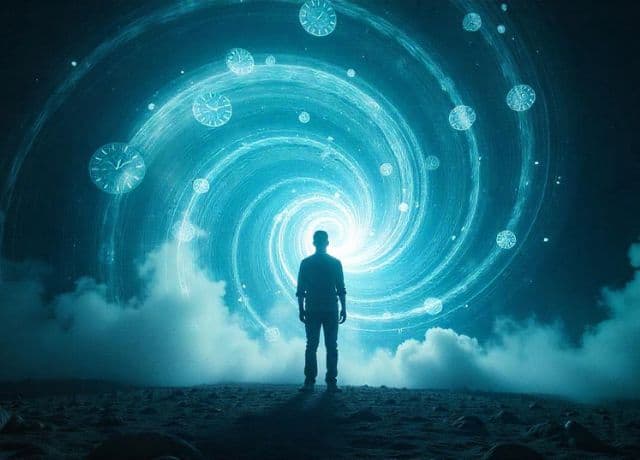
Another way to experience time loops is through what I call “sign-posting.” In this process, I consciously send subtle messages or reminders to a future self who might need a nudge or warning. For example, if I know I’m facing a significant choice in the coming months, I might send my future self a simple memory cue or a calming message. By establishing these future-past signals, I can maintain a sense of continuity that helps me feel guided—even by my intentions.
Retrocausality is a fascinating tool, and it’s always amazing to witness how students make this technique their own, creating personal, actionable “time-loops” that allow them to draw on future insights for present-day clarity and direction.
Experiences with Interdimensional and Unexplained Phenomena
CRV can sometimes open unexpected doors to interdimensional phenomena. Once, during a session on Bigfoot, I had a profound experience that felt as if I were connecting directly with an interdimensional entity. Following this session, my husband and I observed unusual “glitches”—doors locking and unlocking by themselves and objects moving in unusual ways. Many remote viewers have reported similar experiences, where their explorations in CRV seem to attract or open them up to unusual phenomena.
Additionally, I had a memorable encounter with what Native Americans call a “Pukwudgie”—a small, glowing entity on sacred land that seemed to be guiding me. When I shared the experience with others, it was validated by people who knew Pukwudgies from Native lore. It was a powerful reminder of the ways CRV might intersect with the world beyond our everyday perceptions.
Teaching CRV and Building Connections Through Mentorship
Teaching CRV has always been my passion, and over the years, I’ve designed classes that make this skill accessible and relatable. My students range from young professionals to retirees, each bringing unique motivations, whether it’s to develop intuition, understand consciousness, or apply CRV practically in life. My workshops and online classes include live mentoring sessions where we review real CRV cases, discuss experiences, and support each other’s growth.
The student community I work with is deeply connected, often sharing their own CRV journeys and experiences. They learn that CRV, while structured, is flexible enough to support each person’s unique questions and objectives. Through Club PRV, I host monthly sessions that include advanced exercises, such as getting in touch with one’s future self or finding purpose through CRV insights.
Conclusion
Controlled Remote Viewing is a remarkable tool that has reshaped how I, and many others, interact with the world. By grounding this skill in structure, anyone can learn to organize and interpret intuitive data effectively. For students, learning CRV not only enhances decision-making skills but opens doors to deeper self-understanding, purpose, and even a sense of adventure in exploring consciousness. From locating ideal places to live to confirm practical decisions, remote viewing practices extend far beyond “seeing” into the unknown—they empower people to engage meaningfully with the life they’re creating.
Ultimately, I believe that CRV offers a bridge between our conscious and subconscious selves, allowing us to access a well of inner knowledge and wisdom. By applying these practical remote viewing techniques and refining this skill, students are equipped to make more confident, intuitive decisions in their everyday lives. The journey of learning CRV has shown me that, while we may not always have control over life’s events, we have the power to connect, understand, and make decisions from a place of heightened awareness. For anyone curious to explore this intersection of intuition, structure, and discovery, I’m thrilled to welcome you on this journey into the boundless possibilities of remote viewing practice.
